Are You Really an INTP?
- •Tested as INTP multiple times, but something always feels "not quite right"?
- •Keep bouncing between INTP / INTJ / INFP / ENTP?
- •Read the description and thought "some of it is me, some of it really isn't"?
This test was built for you.


Scenario 1: Waking Up Elsewhere
Waking Up Elsewhere
Purple sky. Strangers speaking a language you've never seen — yet somehow you can read it.
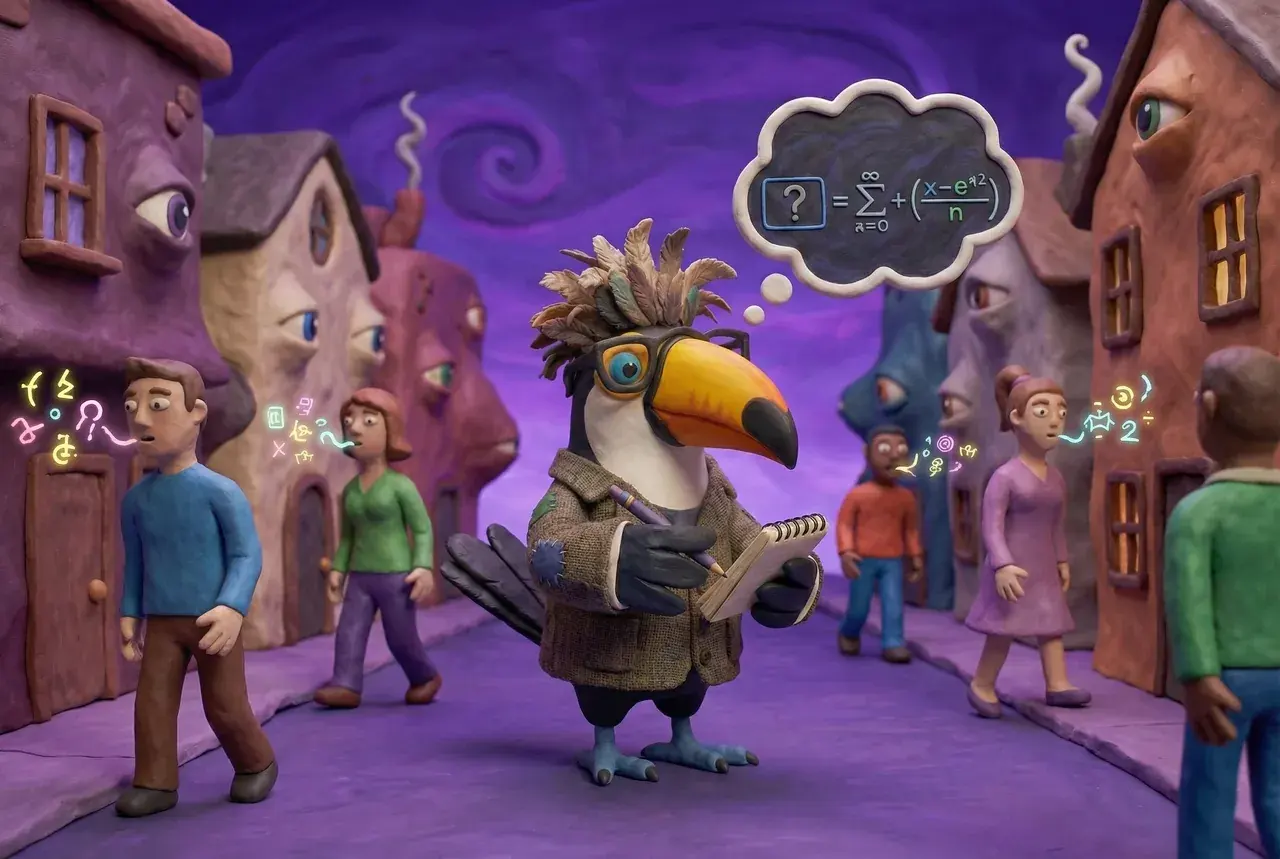
Once you accept this is real, your first move:
The street signs are full of alien symbols. You'd rather:
A local walks up and starts chatting. You:
How much would not understanding this world bother you?
How much do you feel like meeting the people here?
FAQ

This isn't a from-scratch personality type test — it's a verification test.
We don't ask "what type are you?" We help you figure out whether you're actually an INTP.
This test is for you if:
- You've taken a 16-type test before, got INTP, but weren't fully convinced
- You think you're an INTP and want a more rigorous way to confirm it
- You've tested multiple times, sometimes getting INTP, sometimes something else, and you want a reliable answer
This test is NOT for you if:
- You've never come across personality types and don't know what INTP means
- You're looking for a full 16-type personality classification test

"Smart and introverted" describes a lot of types. What really defines INTP is a specific cognitive operating system.
INTP runs on Ti-Ne:
- Ti (Introverted Thinking): An almost compulsive need for internal logical consistency — constantly taking concepts apart until every piece "clicks" in your head
- Ne (Extraverted Intuition): Can't stop branching — one topic automatically splits into five possibilities
That process of "automatically deconstructing everything, can't turn it off" — that's the real core of INTP.
Traditional tests ask about behavior. We focus on cognitive pathways.
A traditional test asks "Do you enjoy socializing?" — that measures behavioral outcomes, which are shaped by way too many external factors.
We drop you into concrete scenarios and watch your instinctive thinking patterns — not whether you "would" do something, but what your gut reaction actually is.
We also tell the difference between ability and preference: you can write neatly with your left hand, but that doesn't make you left-handed.
INTP is one of the most commonly misidentified types:
1. Traditional tests ask the wrong questions — they can barely tell INTP apart from INTJ, ISTP, or INFP
2. You might be describing your "social self" rather than your "instinctive self" — your work persona and social image can skew your answers
3. INTP has a flattering public image — labels like "genius" and "independent thinker" are naturally appealing
Totally normal. If you're matching on surface traits, almost everyone overlaps with several types.
INTP and INTJ both think deeply, but one keeps expanding possibilities while the other converges toward execution. INTP and INFP both live in their inner world, but one is taking apart logic while the other is searching for meaning.
This test gives you a clear-cut answer along with a similarity percentage.
This isn't about rejecting you — it's about helping you find a more accurate fit.
Your results will show you:
- Which dimensions you genuinely match INTP on
- Which type you're more likely to be, and why
- Why you previously tested as INTP
Whatever the result, you'll walk away understanding yourself better than before.
Are you really an INTP?